By D. Scott Forfar, Volunteer Researcher • Lake Country Museum and Archives
When browsing the Lake Country Museum’s historical photograph collection, one quickly notices a familiar and comforting presence: dogs. They appear again and again—perched proudly beside their owners, lounging at their feet, standing alert on ranch trails, or tumbling joyfully through fields with children. Puppies, pampered lapdogs, and hardworking farm dogs all find their place in the archive. These images serve as a gentle reminder that, much like today, people have long cherished their canine companions and felt compelled to preserve those bonds in photographs.
Pet photography itself is nearly as old as photography. From its earliest days, the camera was used not only to record people and landscapes, but also to capture the animals that shared daily life. The Metropolitan Museum of Art may hold the earliest known photograph of a dog: a daguerreotype taken by Louis‑Auguste Bisson of his neighbour’s dog sometime between 1841 and 1849. Even at the dawn of this new technology, dogs were considered worthy subjects—beloved enough to be immortalized in silvered copper plates.
Within the Lake Country Museum’s collection, which is available online through the British Columbia Regional Digitized History Project (bcrdh.ca), a wide variety of pet portrait styles emerges. Some photographs feel spontaneous and intimate, like casual snapshots taken at home or outdoors. One such image shows Frank Rimmer seated with his 3 unmistakably pampered dogs. Their relaxed posture and close proximity suggest familiarity and affection rather than formality. Unfortunately, the dogs’ names have been lost to time, but they may have answered to Prince, Jim, Brownie, Dick, or Sport—among the most popular dog names of the early 1900s, according to the Kern County Museum in Bakersfield, California.
LCMA 2015.37.41
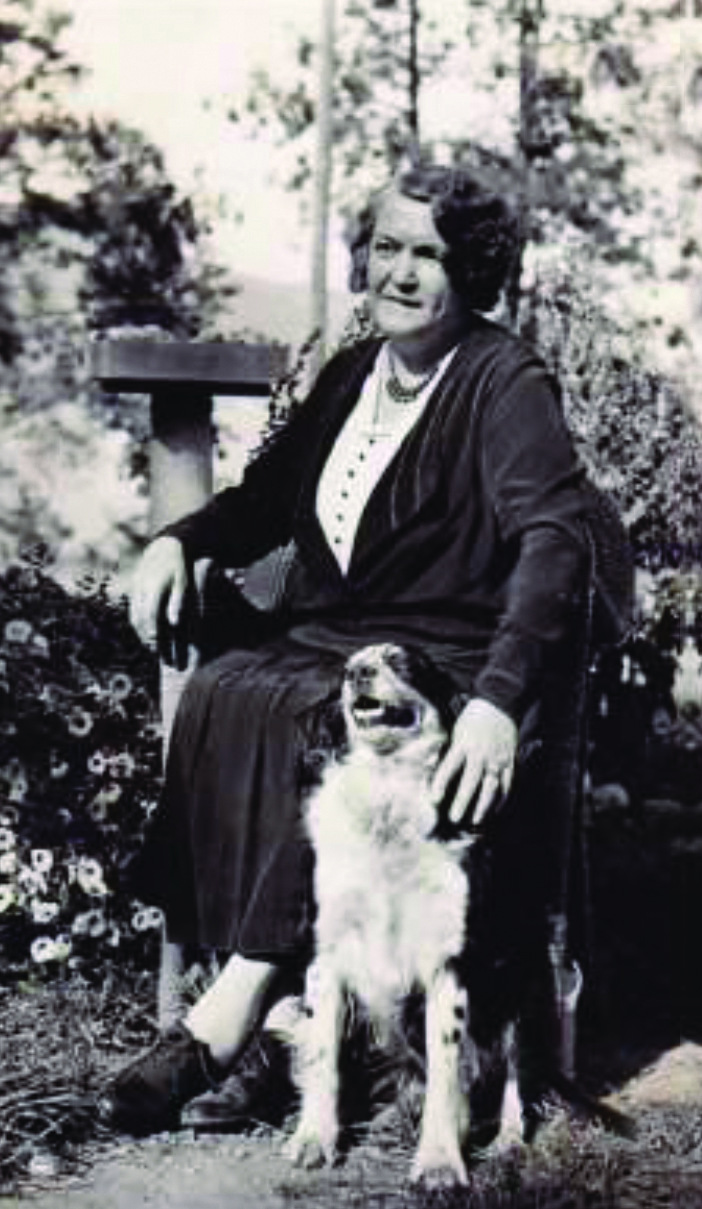
Other portraits are more composed and deliberate. In a striking photograph, Agnes Dawson sits serenely in her garden beside her dog, Ruff. The scene feels carefully arranged, as though marking a meaningful moment or special occasion. Agnes’s choice to pose with her cherished companion amid abundant flowers recalls painted family portraits from centuries past. Throughout art history, dogs were frequently included in such works as symbols of loyalty, fidelity, and faithfulness—qualities clearly valued by their owners and beautifully conveyed here.
LCMA 2005.014.003
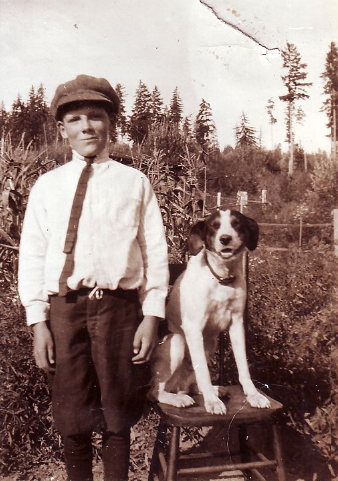
Beyond symbolism and tradition, these portraits reveal something deeply personal: love. Dogs in photographs are not merely accessories or status symbols; they are companions, confidants, and members of the family. This affection is evident in the photograph of Elmer Asher standing beside his dog, Bowser. Elmer is neatly dressed in a crisp white shirt and tie, perhaps preparing for an important day. One can imagine him excited—maybe for his first day of school—yet reluctant to leave his loyal friend behind. The image captures a quiet, universal moment of childhood attachment.
Lake Country’s agricultural heritage is also strongly represented in the museum’s collection. Many photographs feature working dogs who played essential roles on farms and ranches, herding livestock and guarding property. These dogs were valued not only for their companionship, but for their intelligence, endurance, and skill. Anyone who spent time ranching would recognize the familiar commands—’walk up,’ ‘come by,’ ‘away,’ and ‘that’ll do’—used to guide trained herding dogs. Such images speak to a partnership between humans and animals built on trust and cooperation.
Perhaps the most endearing photographs in the collection are those that pair dogs with children. These images evoke memories of long summer days filled with exploration, laughter, and play. In one lively photograph, the Caldwell, Clement, and MacDonnell children gather around an energetic border collie in Norman Bell’s field. The scene captures the carefree joy of childhood and the special role dogs often play as playmates, protectors, and silent companions during formative years.
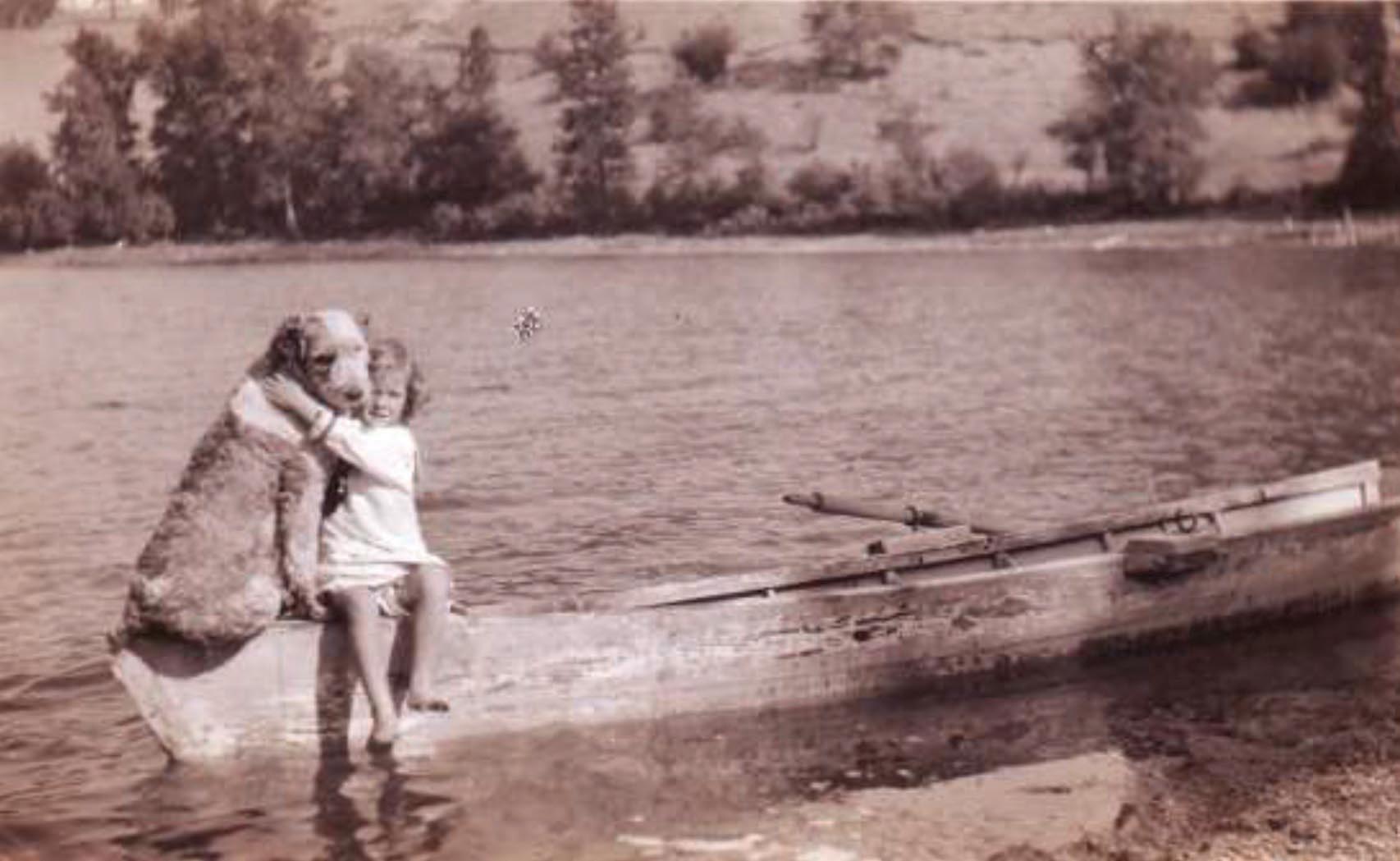
A personal favourite among the collection shows a young girl seated in a boat on Wood Lake, hugging M.P. William’s fluffy ranch dog. The dog appears calm and patient, allowing himself to be embraced, while the girl radiates trust and affection. Whether the dog is a beloved family companion or simply indulging a moment of attention, the photograph captures a timeless bond—one that feels instantly familiar to anyone who has shared their life with a pet.
As I browse these photographs, I can’t help but reflect on the pets that have shaped my own life. Across generations, dogs have offered loyalty, comfort, and companionship. These images remind us that while fashions, technologies, and landscapes may change, the connection between people and their dogs remains constant. The love we share with our pets creates memories worth preserving—then, now, and always.
D. Scott Forfar is a retired museum executive and volunteer researcher, writer and exhibit designer at the Lake Country Museum and Archives. He lives in Lake Count