By Emma Kopp, Marketing and Events Coordinator • Vernon Community Arts Centre
If the words ‘I’m bored’ echo through your home the moment a screen goes dark, you are not alone. For many families, stepping away from screens brings resistance, uncertainty, and often a shared sigh.
But that pause, the moment after the screen turns off, is not something to rush past. It is often where creativity begins.
When I was growing up, screens were not always within reach. There was space in between. Space to be bored, to wander, and to figure things out. Looking back, those moments were not empty at all. They were where creativity took root.
I filled that time without much thought. Drawing, painting, experimenting with whatever I could find. Sometimes messy, sometimes simple, often leading to little ‘art shows’ at home. It was unplanned, but consistent, and it almost always began in those quiet, in-between moments.
That same moment still exists today. The screen turns off, everything pauses, and then comes the question: what now? It can feel challenging, but it is also an opportunity.
What Happens in the Quiet
When screens stop providing constant input, a different kind of thinking begins. Children start to look around, reach for nearby objects, and test small ideas. This does not always happen automatically. It depends on what is available and how inviting the environment feels.
Keep it simple and accessible:
• Paper, sketchbooks, colouring books
• Crayons, markers, pencils
• Scissors, glue, tape
• Recycled materials such as boxes, tubes, and packaging
• Fabric scraps, yarn, ribbon
• Stickers, buttons, and found objects
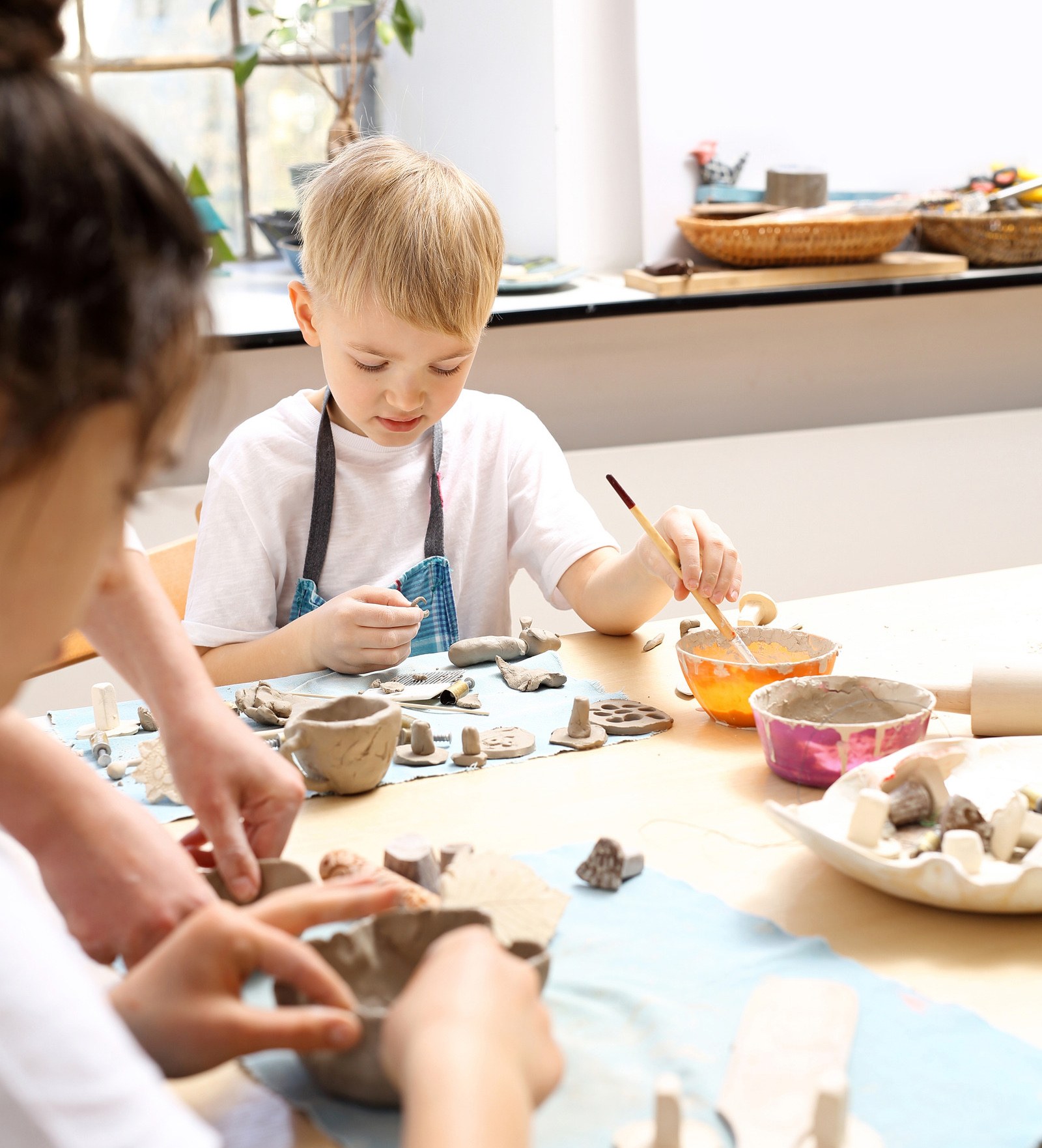
• Playdough or clay
A small bin or basket in a visible space can make a big difference. When materials are easy to reach, creativity becomes an option, not a chore.
Creativity is a Process, Not a Product
It is easy to focus on finished results, but the real value is in the process. When children create, they make decisions, test ideas, and adapt when things do not work. This builds problem-solving skills, patience, and confidence. That sense of ‘I made this’ carries far beyond the project.
Instead of focusing on outcomes, shift the conversation:
• “Tell me about what you made.”
• “How did you decide to do that?”
These questions highlight thinking, not perfection.
Handling Screen-Time Resistance
Transitions away from screens are not always smooth, and that is normal. Screens offer instant engagement, while creativity takes time to unfold.
Consistency helps. Set expectations ahead of time:
• “After screen time, we will have time to create or play.”
Offer simple choices:
• “Do you want to draw or build?”
• “At the table or on the floor?”
This keeps structure while giving a sense of control. There may be pushback at first. That adjustment period is part of the process. Over time, as creativity becomes more familiar, resistance often fades.
When Time and Space are Limited
Creativity does not require a lot of time or space. Even 10 to 15 minutes can be meaningful after school, before dinner, or during a quiet evening.
Keep it manageable:
• A small, portable bin
• A sketchbook and a few tools
• A simple setup that is easy to put away
Consistency matters more than scale. Small, regular moments build lasting habits.
From Watching to Making
Screens are not always the problem. They can
even inspire ideas. The opportunity lies in what happens next.
Encourage children to take what they have seen and try it themselves:
• “Do you want to try something like that?”
• “What would you do differently?”
When children adapt ideas, they begin to create something that is truly their own.
Connection Through Creativity
Creative time also builds connection. It does not need to be structured. Simply sitting and creating alongside your child can be meaningful. You do not need to lead. Starting something yourself can be even more powerful. It shows that creativity is something people do, not just something they are told to do.
These moments are quiet, but they create space for conversation, presence, and shared experience.
Bringing it Back to the Moment
When the screen turns off, that moment does not need to feel like a problem to solve. It can be something you prepare for. A clear space, a few materials, and a bit of open time can transform ‘what now?’ into a beginning. For many of us, creativity lived in those in-between moments. That has not changed. It just needs a bit more intention now.
At the Vernon Community Arts Centre, we see this shift happen every day. Children arrive unsure of where to start, and with a bit of space, time, and encouragement, they begin to explore, experiment, and create in their own way. It is not about perfect outcomes or structured instruction, but about access to materials and the freedom to try.
What starts as a small shift can become something more. A habit. A rhythm. A different way of spending time. Over time, creativity becomes less of something you plan for and more of something that naturally fills the space when nothing else does.
Emma Kopp is the Marketing and Events Coordinator at the Vernon Community Arts Centre, where she is passionate about fostering creativity, connection, and community. The Centre champions programs that invite people of all ages and abilities to explore visual arts, encouraging self-expression, lifelong learning, and playful discovery.
To learn more about classes, workshops, and upcoming events, visit www.vernonarts.ca.